From invisible to hired at Stanford
A year after relocating to California as a researcher’s spouse, I felt invisible. Without a job, I wasn’t just unemployed— I was completely lost. Teaching had always defined me, and I knew what I wanted now: a teaching assistant position at Stanford.
But why would they hire me— a non-native English speaker, an outsider— over countless local, fluent candidates? I tried not to listen to that voice.
Then one morning, my friend Elena sent a message: “There’s an opening for a TA in a course on clarifying career choices at Stanford Med. You should apply.” I did. It felt like the opportunity of a lifetime. It was more than just a job for me— it was a chance to rebuild my career and my sense of identity.
The application was easy— résumé, cover letter, done. Then came the interview invite.
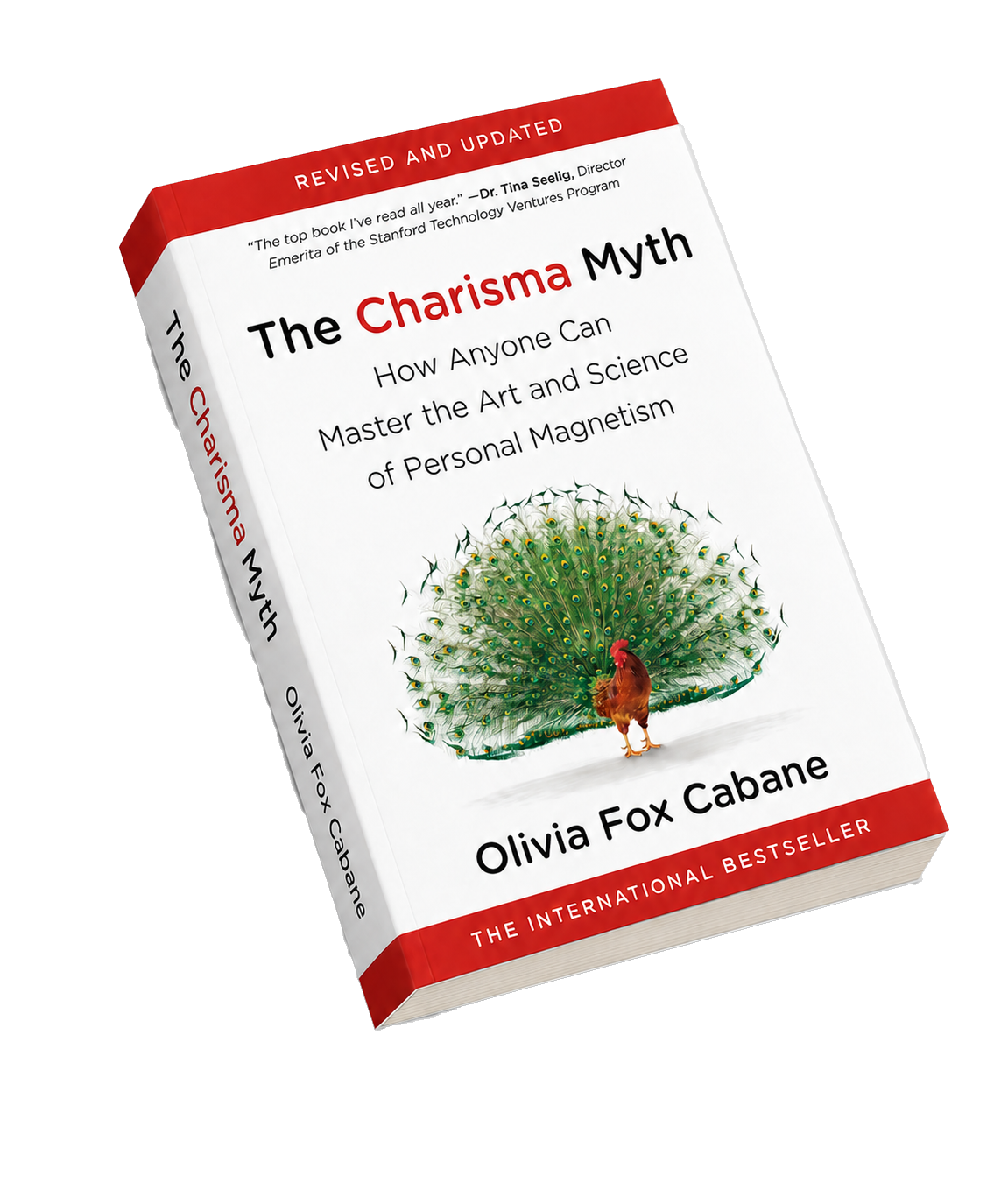
For two weeks, I obsessed over grammar and vocabulary, rehearsing perfect sentences. But the more I practiced, the smaller I felt. Three days before the interview, I told my friend Dana, “I want this so badly. But my English . . . They won’t hire me.” She handed me The Charisma Myth. “Stop fixating on your English,” she said. “Focus on body language.” That I could do.
I dove into chapter 9: “Charismatic Body Language.” I chose two things to try— mirror the interviewer’s body language during the conversation and hold eye contact for three seconds at the end of the interview. On the interview day, I felt ready. This was more than a job— it was a way back to myself.
Then my bike got a flat tire. I ditched it and ran the rest of the way, sweaty and breathless, terrified I’d blown my first impression. But I straightened my back and walked in.
As the interview began, I focused on staying present. Instead of letting fear take over or getting stuck in negative thoughts about my English, I paid close attention to my interviewer’s body language. When she opened her arms, I gently mirrored her gesture. Later, when she leaned forward onto the table, I did the same after a short pause.
At the end of the interview, during our handshake, I looked her directly in the eyes and held her gaze for a full three seconds—without saying anything. I counted silently in my head. Then I left the room.
That night, I raised a glass of wine with my partner— not yet to success, but already just to showing up.
Three days later, my phone rang: “Nadia, when can you start?”
Nadia Belkind